Start With Something Unscalable
Why the most valuable ideas aren’t built for mass appeal

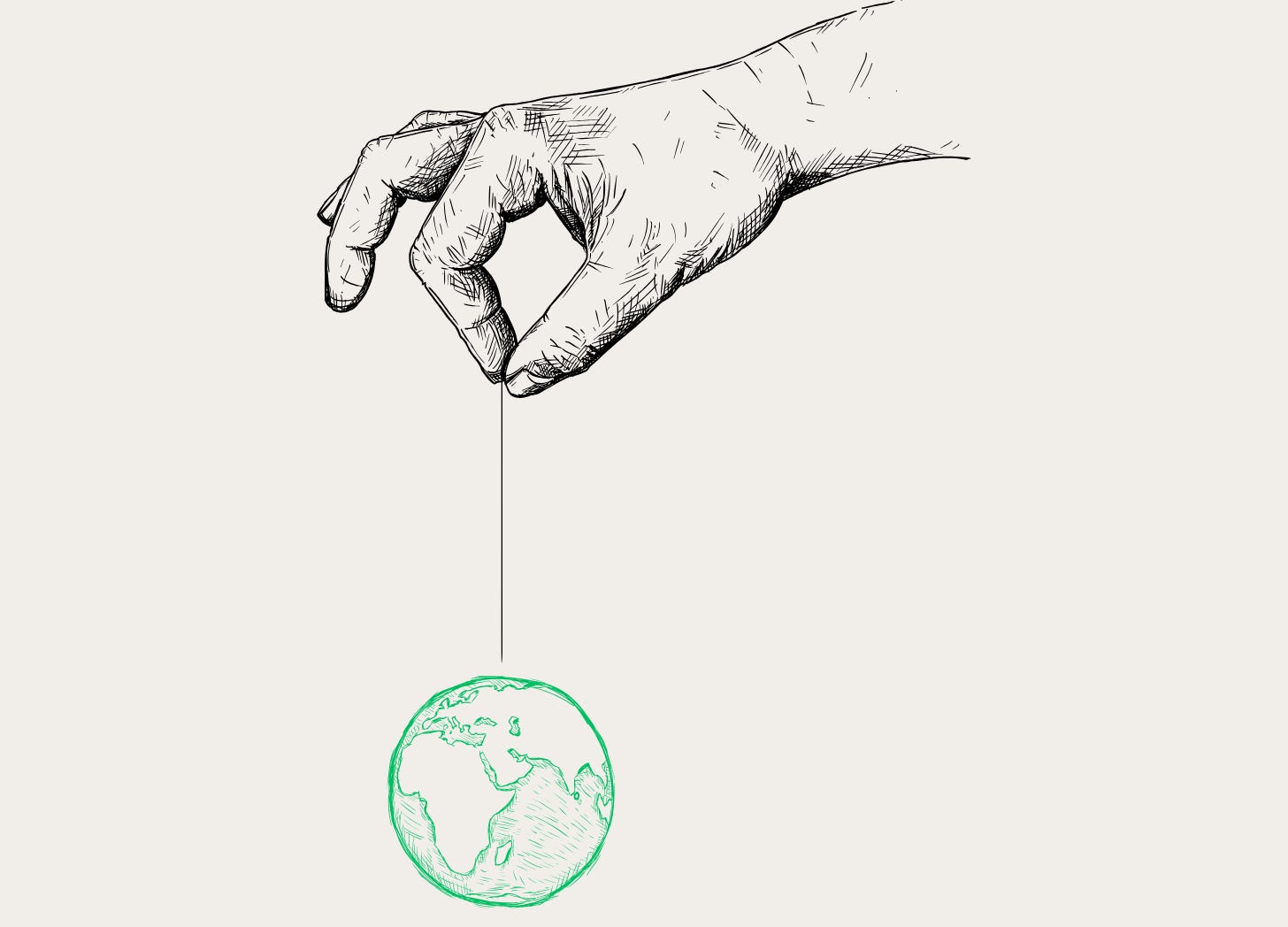
I have an instinct for conjuring unscalable ideas. It’s not that I don’t have scalable ideas, but the ones that excite me most tend to be high-effort, high-impact, and not easy to replicate.
As someone who identifies more as an innovator than an opportunist, this approach to creation tracks. When bringing a vision to life, I’m optimizing for unique, impactful ideas rather than mass-market appeal.
When we start with scale in mind or scale prematurely, we work from assumptions rather than insights. When we pursue depth and discovery, we can generate groundbreaking ideas based on earned clarity.
Scale and intention exist in tension. Scale usually demands efficiency, predictability, and speed. But innovation and invention are meticulous by nature. They emerge from a process that prioritizes experimentation, deep relational insight, purposeful design, and data-driven iteration. If we want to produce something remarkable, we have to be willing to give it the time it takes to develop and ourselves the time to understand the nuances of what’s working and what needs refinement.
Copy-and-paste ideas are always competing with the first, best, or biggest, but unscalable ideas often become trailblazers, category creators, and the gold standard.
When I use the term unscalable, I don’t mean an idea that lacks potential for scale; I mean it wasn’t initially designed with scale in mind. Scale might be a secondary consideration or become a priority later on in the process.
I often joke that I wish I’d invented Post-It Notes because it’s so simple, so practical, and so scalable. But the reality is that Post-It Notes only exist because someone spent years experimenting with a failed adhesive no one knew what to do with. It became what it is today because two people were willing to spend years exploring the value of something unclear and emergent. Today, Post-It Notes are a billion-dollar product line for 3M, sold in over 100 countries.
The opportunity of the unscalable idea is in its originality and integrity. Sometimes, an original idea can strike like a bolt of lightning, but those stories are rare and not always factual. In most cases, original ideas need incubation; they may seem useless at first, and they’re not always the most obvious or attractive to invest in.
They can initially even feel like questionable or “bad” ideas.
Why would anyone trust an algorithm to find them a romantic partner?
Why would anyone believe that a decentralized currency could work?
Why would anyone buy clothes without trying them on?
Why would you stay in a stranger’s home instead of a hotel?
Why would anyone want to eat plant-based meat?
Why would anyone trust a random person to drive them around?
Why would anyone pay to have someone teach them how to sit still and quiet their minds?
The things that eventually scale and gain cultural momentum tend to start as something unscalable. Because what’s unscalable is profound, what’s profound is valuable, and what’s valuable is worth scaling.
Scale = when something of value can meet real demand at volume.
Sometimes the scalable thing is the outcome of iteration and refinement. Sometimes it’s a eureka moment. Sometimes the scalable thing is embedded in the unscalable thing and only surfaces over time.
Hidden inside the unscalable
When a scalable thing is embedded in an unscalable one, it usually looks small, manual, intimate, inefficient, hard to explain, and/or not obviously “big” at first. The thing that scales isn’t always a product. It can also be knowledge, a media format, a practice, a framework, among other non-tangible things.
The Artist’s Way is a case where the scalable thing was not a product, but a practice and philosophy that people could apply and adapt in their own lives. Yoga is another great example of this.
If you really think about it, the most scalable creation in human history isn’t a product at all, it’s religion. A meaning-making system that has lasted across generations precisely because it exists inside and travels through people, not platforms.
That said, many scalable things are products, and many of those products trace back to the worldviews they came from. Mats, studios, and teacher trainings emerged from Yoga. Books, calendars, and churches and temples institutionalized religion. Therapy, meditation apps, and coaching programs emerged from psychology. What gives something meaning is often the very thing that makes it hard to scale. But that friction is fertile ground for uncovering valuable ideas that eventually can scale.
You can also scale a feeling or a social value system. Airbnb built a two-sided marketplace enabling people to find affordable, unique places to stay, but more fundamentally, they used brand, design, and technology to scale trust between strangers. Uber operates on the same principle.
As an example, the World-Building Lab I recently launched is currently unscalable. It’s designed for a small, curated group of 8-12 people to go through an in-person, immersive learning experience together. It doesn’t get more high-touch than that. But I’m not focused on scale right now, I’m focused on iterating, refining, and continuing to expand on a vision I believe can disrupt how we learn, build, and operate in the world.
What could hypothetically happen as the creative process continues to unfold is that something clearly scalable surfaces from the Lab. This might be a knowledge system that leads to tangible products like books and facilitator training, or a game based on the experience, or an app that turns the most valuable aspect of the Lab into something you can access every day. Or something else entirely.
If I let my mind wander too much to what it could become 5-10 years from now, I’ll lose the plot. Because what we focus on expands, and I want what expands (or spreads) to be deeply precise, authentic, original, and undeniably valuable, able to stand the test of time. To do so, I need the mental discipline of an athlete, the patience of an artist, the curiosity of a researcher, the devotion of a seeker, and the risk tolerance of an entrepreneur.
Before you scale
Whether you’re developing a service, a product, an experience, or a philosophy, there are some key questions to consider before exploring scale:
Do I know what the most valuable part of what I’m offering actually is, and do I have real data or lived evidence to back that up?
Could a competitor with more capital, reach, or brand recognition easily replicate this?
Have I built enough brand trust, reputation, or community that people would choose this over a cheaper or louder alternative?
Is there clear proof that people don’t just like this, but want it enough to pay for it?
Do I have the resources, operational capacity, and emotional stamina required to scale without burning myself or my team out or compromising the integrity of the work?
Sometimes it’s not just the yes/no answers that matter, but knowing if the timing is right. Not just for you or your team, but whether there’s true market and cultural alignment.
If you have the resources and tenacity to compete with the “big dogs” in the market, go ahead, build for scale from the outset. You don’t have to overthink HR software; you can run a competitive analysis, fill the gaps your competitors are missing, position yourself in a way that captures market share, and be off to the races. But remember, scaling is expensive, features aren’t a real differentiator (anyone can copy them), and efficiency doesn’t build brand loyalty. So what stands out? What can sustain momentum over time?
Intellectual Property. Something valuable you own that’s not easily replicable.
Brand power. A strong, recognizable brand that people trust and believe in.
Community. A group of people who champion your idea and actively support its success.
Originality. Being the only vs the first or the best or the cheapest.
Demand. Solving a burning pain point or offering something people genuinely want, are willing to pay for, and can’t easily get elsewhere.
If you’ve got a couple of the above, you can build something viable. But if you manage to hit all of them, you’ve struck gold. At that point, scaling becomes less about proving value and more about figuring out how to bring your offer to more people without diluting its original intent or quality.
Scale is not inevitable; it’s a choice that comes with a lot of risk and repercussions. Scale might mean more money, but it can also mean more impact, and for those who believe in what they’re building and want more people to have access to it, scale may be the unavoidable choice.
When you start with software or media, you’re positioned for scale from the outset. You’re playing a different game in a different arena—a very competitive one. When you start with anything else, you’re in the lane of potential to scale, with likely longer timelines.
But if/when you do scale, the potential for sustainable impact is much higher. TED is my favourite unscalable idea to reference because they developed a licensing model and media strategy that took them from a small annual conference to one of the biggest, globally recognized brands, with a distribution engine that reaches hundreds of millions of people and tens of thousands of independently organized events around the world.
That’s just one model for scale; it worked for TED, Creative Mornings, and Daybreaker, but it’s not easy copy/paste. You have to find the model that works for you.
The unscalable approach is a relatively low-risk way to experiment and test everything from the core philosophy to the product to the positioning. Scaling is not as forgiving. When we ‘go big or go home’, we face much greater consequences; every slight misstep and cycle can cost us tremendous time, money, and effort.
In the scale-first model, time-to-value and how quickly a prospect converts are critical. In the scale-second model, value is not necessarily measured by time but by depth of insight and strength of signal.
The unscalable thing is a journey, but it’s where the truth reveals itself. If we’re willing to commit ourselves to the process, we could eventually land on something extraordinary.
And no matter where we end up, scale is always a choice.
Jiro Ono had only one sushi restaurant in Tokyo that could seat 10 people at a time. Nobu Matsuhisa has built a restaurant and hospitality empire spanning over 50 restaurants and 40 hotels worldwide. They are both considered sushi masters. Their restaurants have received Michelin stars. They’ve both had documentaries made about them. But they chose wildly different paths.
When we devote ourselves to mastery, what ends up “scaling” may not be a product or even a philosophy, but a story that can inspire millions of people across time.
My big a ha moment for my own project was that human-scale, ~150, is enough. More than enough, it is what matters. The space where love is real.
I value this post. My ingenuity and creativity means I have a ‘scalable’ idea but perhaps due to my own uniqueness and brand, is unscalable, perhaps at least in the short term. I like the idea of being ‘visionless’, since a vision itself perhaps represents a mountain to climb rather than a molehill — one is evidently much easier to climb.